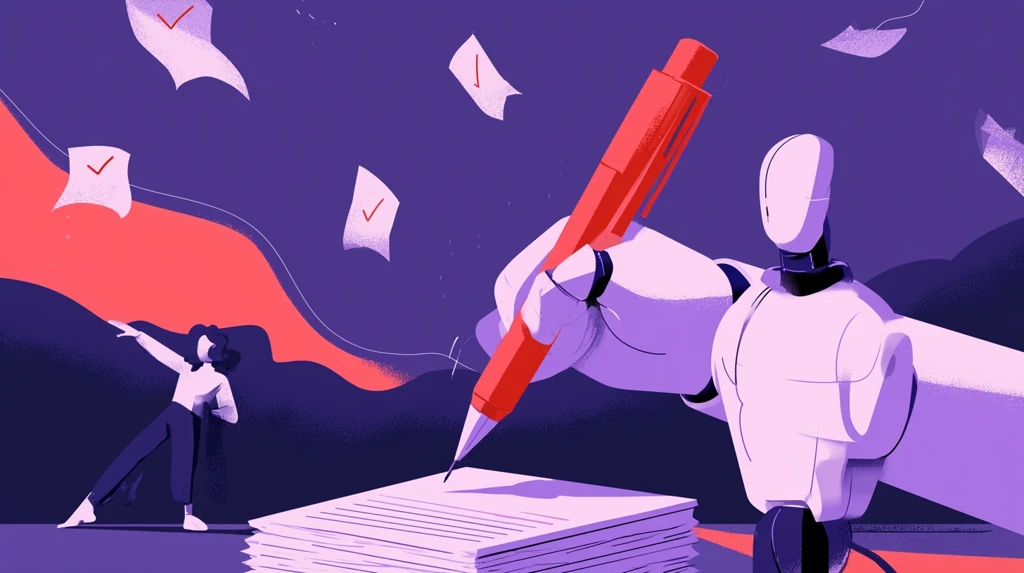
Grading is the part of teaching most ripe for automation — and the part where automation can go most wrong. The current generation of AI grading tools can score multiple choice instantly (that part is old), draft feedback on essays, grade short answers against a rubric, and cut a Sunday grading pile from four hours to one. This guide sorts the tools by what they grade, what they are honestly good at, and the guardrails that keep AI feedback fair and defensible.
The Three Tiers of AI Grading
- Tier 1 — Objective items (solved): multiple choice, matching, fill-in — any quiz platform self-grades these perfectly. If you still hand-grade these, start here today.
- Tier 2 — Short answers (good with care): AI compares responses against your criteria and flags borderline cases for review. Accuracy is high when the target answer is well-defined.
- Tier 3 — Essays and projects (assistive only): AI drafts rubric-based feedback and spots structural issues; the judgment and the grade should remain yours.
The Tools
1. Your quiz platform's built-ins (Tier 1–2)
Wayground self-grades every objective question type and lets you manually review open-ended responses in the report — assign practice via homework mode and the grading simply never exists as a task. Test-quality settings live in our test maker guide.
2. Teacher AI suites: essay feedback tools (Tier 3)
Tools like MagicSchool, Eduaide, and Brisk generate rubric-aligned draft feedback on student writing — glows, grows, and inline suggestions. Honest assessment: the feedback is 80% usable, generic in spots, and dramatically faster than starting from blank. Best use: AI drafts, you personalize the two sentences that matter.
3. General chatbots with a rubric prompt (Tier 2–3)
Paste your rubric and an anonymized response into ChatGPT/Claude/Gemini: "Score this response against each rubric row, cite the specific line that justifies each score, then write two sentences of feedback — one strength, one next step." The line-citation requirement is the anti-hallucination lever. Never paste student names or identifying details.
4. Google Classroom / LMS AI assists (integrated)
Rubric attachment, comment banks, and increasingly AI-suggested feedback inside the tools your district already approved — the least exciting and often most practical option, because the data stays in-platform.
5. Math-specific graders
Photo-based math grading (scan worked problems, AI checks steps) is improving fast but still misreads handwriting and unconventional-but-correct methods. Use for practice checks, not summative scores.

The Guardrails That Keep It Defensible
- AI drafts, teacher decides. Publish no grade a human has not seen — this is both good practice and, increasingly, district policy.
- Never feed identifiable student work to general chatbots. Strip names; better, use district-approved tools with data agreements.
- Audit weekly: hand-grade a random 10% and compare. Drift means your rubric prompt needs tightening.
- Keep the rubric public: students should know the criteria whether a human or a machine applies them first.
- Watch for bias patterns: AI feedback tends to reward conventional structure; protect the unconventional-but-brilliant response by reviewing outliers personally.
A Realistic Weekly Workflow
Objective checks run through your quiz platform and grade themselves (the formative loop). Short-answer sets get AI-scored Monday with borderline flags reviewed over coffee. Essays get AI-drafted feedback that you personalize during one planning period — your voice on top of its speed. Teachers running this loop report grading time cut by half or more, with feedback quantity going up.
Frequently Asked Questions
Are AI grading tools accurate?
On objective and well-specified short answers, yes. On essays, they are consistent but shallow — reliable on structure and criteria, weak on voice, originality, and risk-taking. That split is exactly why the human stays in the loop.
Is AI grading allowed in schools?
Policies vary fast — most districts now permit AI-assisted feedback with teacher review and prohibit fully automated grading of major assessments. Check yours before adopting.
Will students know?
Tell them. "I use AI to draft feedback and I review every word" models exactly the AI literacy we want students to have.
What is the best free starting point?
Move every objective check onto a self-grading platform this week; add AI-drafted essay feedback once that habit sticks.
TheQuizizz.com is an independent guide and is not affiliated with any platform mentioned.