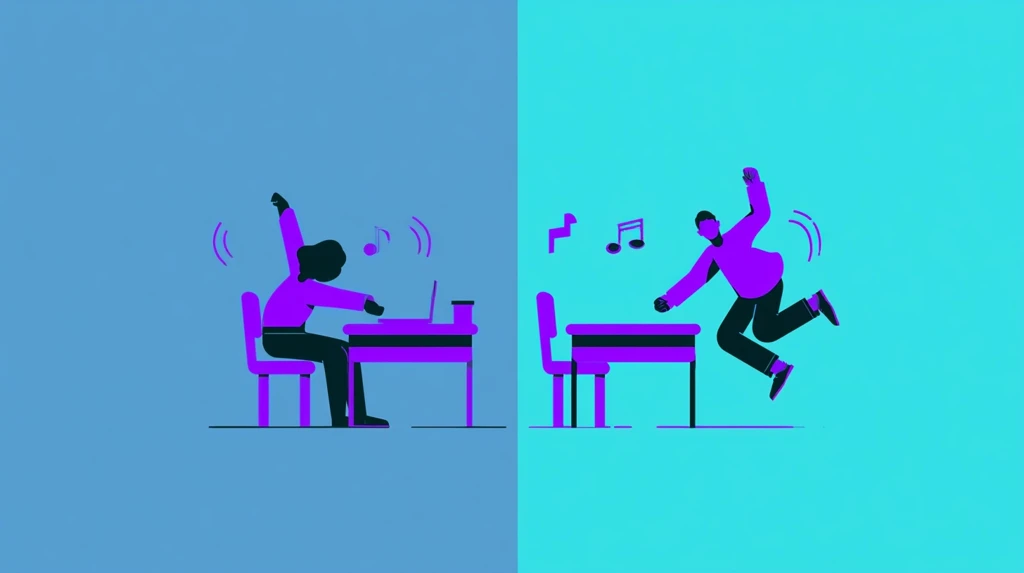
Attention is a consumable. Around the 15–20 minute mark (younger students: sooner), working memory clogs, fidgeting spikes, and instruction stops landing — not because students stopped caring, but because brains buffer-overflowed. A brain break is the two-minute reset that flushes the buffer. Here are 30 that work from kindergarten to senior year, sorted by the kind of reset your class needs right now.
Movement Resets (Energy Too Low)
- Stand and stretch sequence: 60 seconds, arms-shoulders-neck, back to work. The minimum viable break.
- Cross-crawls: opposite elbow to knee ×20 — crossing the midline is the classic refocus move.
- Desk push-up set: 10 desk push-ups + 10 chair squats; older students respect the mini-workout framing.
- Silent speed walk: one lap of the room, zero talking, back in seats by the timer.
- Rock-paper-scissors tournament: losers become winners' cheering section — 90 seconds to a champion.
- Invisible jump rope: 30 seconds; sillier than it sounds, works better than it should.
- The wave: around the room until it is smooth — collective timing as a focus reset.
Calming Resets (Energy Too High)
- Box breathing: in-4, hold-4, out-4, hold-4, ×4 — projected visual timer helps.
- 5-4-3-2-1 senses: five things you see, four hear, three feel… the grounding classic.
- One-minute doodle: one prompt ("draw the weather inside your head"), no rules, pencils down at the bell.
- Head-down listening: one instrumental track, lights dimmed, 2 minutes. Post-lunch gold.
- Slow-motion stretch: the stretch sequence at quarter speed — moving meditation without the framing.
- Palm press and release: press palms hard 5 seconds, release, ×5 — tension out through the hands.
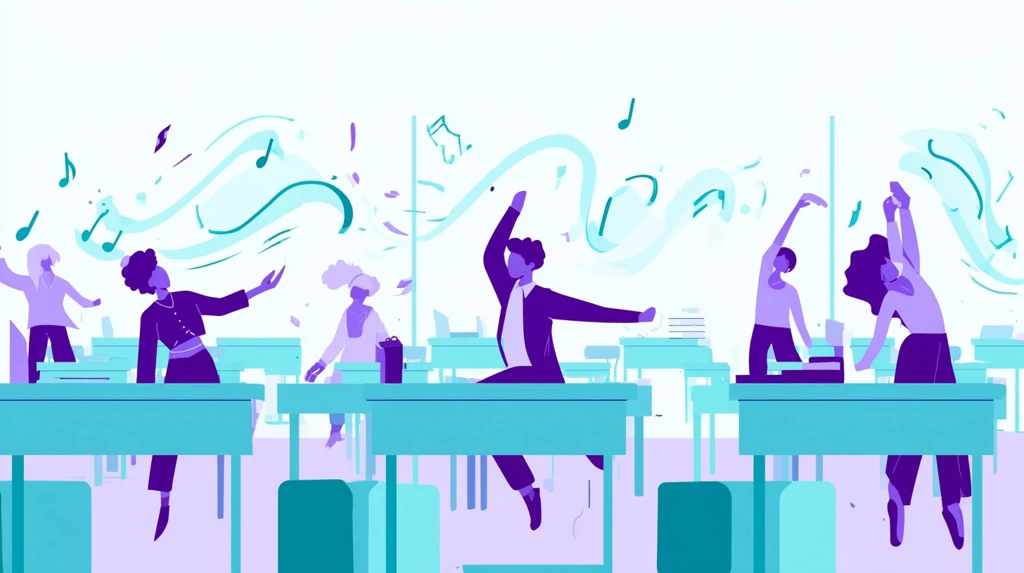
Cognitive Switches (Attention Drifted)
- Would You Rather: one juicy question, hands or corners, 90 seconds of debate.
- Category ping-pong: pairs alternate naming items in a category until someone stalls.
- Backwards alphabet race or count-by-7s — a hard cognitive gear-change resets the working set.
- One-song trivia burst: 3 fun questions on a game platform, music on — the Friday formats in micro-dose.
- Twenty questions: one mystery object, class narrows it down — inference practice in disguise.
- Riddle of the day: post it, let it simmer, reveal after the next work block — delayed closure holds attention.
- Story chain: one sentence each around a row — collaborative nonsense, guaranteed laughter.
Content-Adjacent Breaks (Sneaky Review)
- Vocabulary charades: this unit's terms, acted out (more vocab formats).
- Human bar graph: stand on an answer line — opinion or review question, bodies as data.
- Speed teach: 60 seconds, teach your neighbor one thing from today, swap.
- Lightning round: 5 review questions, game mode, no stakes (quick-launch guide) — a break that is secretly retrieval.
- Gallery glance: stand, examine one poster/anchor chart, report one detail you never noticed.
Zero-Prep Standbys
- Simon Says — never dies, K-12 (seniors play harder than freshmen).
- Silent ball — soft ball, no talking, drop = sit; the ancient technology still works.
- Weather report: everyone states their internal weather in two words — SEL check disguised as a break.
- Desk drum pattern: teacher taps rhythm, class echoes, escalate complexity.
- The 90-second tidy: music on, room reset, done — a break that pays rent.
Using Them Well
Schedule breaks BEFORE the crash (every 20–25 minutes of instruction; watch for the fidget wave as your signal), keep them to 2–3 minutes with a clear re-entry cue, and match type to symptom — movement for slumps, calming for chaos, cognitive for drift. Pair with your bell ringer and exit ticket routines and the period gains a rhythm students can feel. The research case for all of it lives in our learning science explainer — attention management IS learning management.
Frequently Asked Questions
Do older students need brain breaks?
High schoolers need them MORE (longer periods, heavier cognitive load) — they just need formats with dignity: cognitive switches, mini-workouts, music.
How do I stop breaks from derailing the class?
Timer visible, re-entry cue rehearsed, same 5–6 formats in rotation — routine makes the return automatic.
Are brain breaks evidence-backed?
Attention restoration and movement-cognition links are well-supported; the practical evidence is your own room — try two weeks and watch the last 15 minutes of class change.
TheQuizizz.com is an independent guide.